Why Simple Maintenance Matters in C&I Energy Storage Projects
2026-08-30
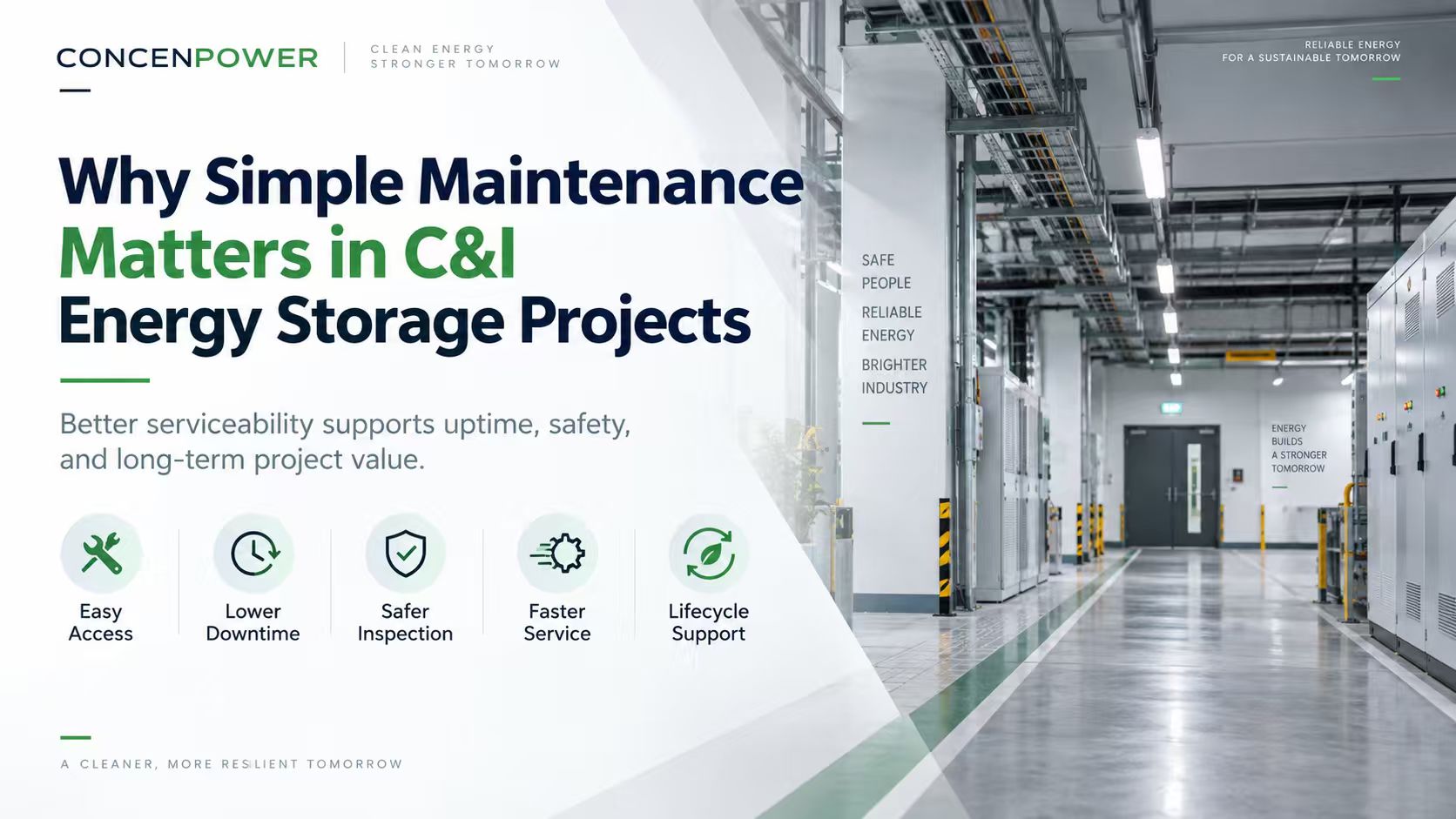
In C&I energy storage projects, performance specifications often get the most attention.
But once the system is commissioned, another factor becomes equally important:
How easy is it to maintain?
A BESS may operate for many years, which means routine inspection, troubleshooting, component replacement, monitoring, and preventive maintenance all become part of the project lifecycle. NREL notes that preventive maintenance can help avoid more expensive failures and support system output, while maintenance requirements vary depending on system size, design, complexity, and operating environment.
For EPCs and project owners, a maintenance-friendly system can make a practical difference in several areas.
1.Faster access to key components
PCS, battery modules, cooling equipment, protection devices, communication hardware, and control systems should be arranged with service access in mind.
When technicians can inspect or replace components without unnecessary disassembly, service work becomes more straightforward.
2.Clearer fault diagnosis
Maintenance is not only mechanical.
A well-integrated BMS, EMS, PCS, and monitoring system can help operators identify abnormal temperatures, communication issues, alarms, or equipment faults before sending technicians to site.
NREL’s O&M guidance specifically highlights performance monitoring, trend review, corrective-maintenance response times, and service documentation as important operational considerations.
3.Less disruption to site operations
For factories, warehouses, commercial facilities, and other C&I users, maintenance may need to happen while normal business continues.
System layout, isolation design, modular components, maintenance clearance, and spare-parts availability can all affect how easily service work can be performed.
4.Better lifecycle planning
The purchase price of a BESS is only one part of its total cost.
Inspection, scheduled service, battery augmentation, component replacement, technician time, and spare parts all contribute to long-term O&M. NREL’s commercial battery-storage modeling therefore treats O&M as a continuing lifecycle cost rather than a one-time consideration.
This is why EPC buyers should evaluate maintenance before equipment arrives on site.
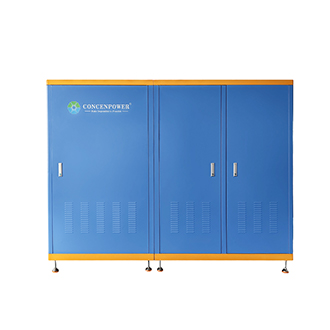
At CONCENPOWER, we believe C&I energy storage design should consider not only power and capacity, but also installation, monitoring, accessibility, thermal management, and long-term serviceability.
A good energy storage system should not only be easy to commission.
It should also be practical to operate and maintain throughout its lifecycle.
For your projects, what creates the biggest maintenance challenge: equipment access, fault diagnosis, cooling systems, or spare-parts availability?