From Battery Cabinet to Complete C & I ESS: What EPC Buyers Should Evaluate
2026-09-15

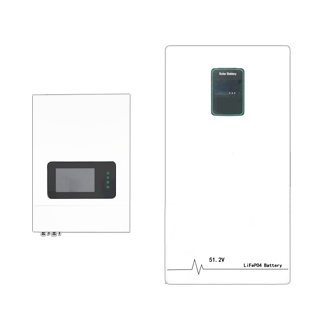
Buying a battery cabinet is not the same as buying a complete C&I energy storage system.
For EPC buyers, the real project risk often appears in the gaps between components: battery, PCS, EMS, thermal management, protection, communications, commissioning, and after-sales support.
So what should be evaluated before selecting a C&I ESS supplier?
1. System architecture
Start with the complete electrical and control architecture—not only battery capacity. Confirm how the battery, PCS, EMS, BMS, HVAC or liquid-cooling system, fire protection, and site controller work together.
2. Application fit
Different projects have different priorities: peak shaving, PV self-consumption, backup power, load shifting, or grid-support functions. The system should be sized around the actual load profile and operating strategy, not simply the largest available kWh figure.
3. PCS selection
PCS performance affects conversion, grid interaction, and operating flexibility. EPC teams should check rated power, overload capability, voltage range, communication protocol, grid-code compatibility, and whether air-cooled or liquid-cooled PCS is more suitable for the site environment.
4. Thermal management and safety
Temperature consistency is critical for battery operation and lifecycle management. Buyers should review cooling design, battery monitoring, protection logic, fire detection/suppression strategy, emergency shutdown, and the documentation required for transport and project approval.
5. EMS and communication
A complete ESS must be controllable. Check whether the EMS can coordinate PV, grid, battery, and loads, and whether interfaces such as Modbus, CAN, Ethernet, or other required protocols are available for project integration.
6. Installation and serviceability
Container layout, cable access, maintenance clearance, commissioning procedures, spare-parts strategy, and remote diagnostics can directly affect EPC workload after delivery.
At CONCENPOWER, we view C&I storage as a system-integration project rather than a single-product purchase. Our portfolio includes air-cooled PCS, liquid-cooled PCS, battery storage equipment, and containerized ESS solutions for different project requirements.
For EPC buyers, the better question is not:
“Which battery cabinet is cheaper?”
It is:
“Which system is easier to integrate, operate, maintain, and support throughout the project lifecycle?”
For your C&I projects, which factor usually requires the most supplier evaluation: PCS, EMS, thermal management, safety, or after-sales support?
Related News
How Does An Integrative Power Bank Stack Up Against Regular Power Banks in Terms of Compatibility?
2026-05-12
What are the Types of Energy Storage Systems?
2026-05-13
What Can a Portable Power Station Run?
2026-05-13
Is the cost of a solar battery worth the investment?
2026-05-12
Integrative Power Bank: Is It Worth The Investment for Frequent Travelers?
2026-05-12
No more