Why Liquid-Cooled BESS Is Gaining Attention in C&I Projects
2026-08-15

As commercial and industrial energy storage systems become larger and more power-dense, thermal management is becoming a bigger part of system design—not just a supporting function.
Recent research on energy storage thermal management points to a clear engineering trade-off: air cooling offers simpler architecture, while liquid cooling provides stronger heat-transfer capability and more uniform temperature control, making it increasingly relevant for larger and higher-density ESS applications.
So why are EPCs and project developers paying more attention to liquid-cooled BESS?
1.More controlled thermal management
Battery cells generate heat during charging and discharging. In larger systems, maintaining consistent operating temperatures across modules becomes increasingly important.
Liquid cooling transfers heat through a circulating coolant loop, allowing more direct heat removal than relying primarily on airflow.
2.Better fit for higher-density system layouts
C&I projects often need to maximize usable energy within limited installation space.
As battery and power density increase, the thermal load inside cabinets or containers also increases. Liquid cooling can therefore become an attractive option when system designers need stronger temperature control within a compact layout. Current ESS research similarly notes growing thermal-management challenges as heat flux density rises.
3.Suitable for demanding operating conditions
Factories, industrial parks, solar-plus-storage projects, EV charging sites, and backup-power applications can involve long operating periods and changing load profiles.
For these projects, cooling architecture should be evaluated together with ambient temperature, system duty cycle, enclosure design, PCS power, and maintenance requirements—not selected in isolation.
4.But liquid cooling is not automatically the better choice
A liquid-cooled BESS also introduces pumps, coolant circuits, heat exchangers, monitoring, and additional maintenance considerations.
For smaller or less thermally demanding projects, air cooling may still provide a simpler and practical solution. The right choice depends on project scale, operating environment, layout, budget, and lifecycle requirements.
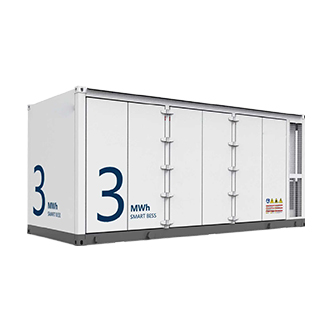
At CONCENPOWER, we see thermal management as one part of the complete energy storage architecture. From PCS and battery systems to containerized solutions, the objective is to match the system configuration to the real application—not simply choose the most complex technology available.
For EPC buyers, the better question is not:
“Is liquid cooling more advanced?”
It is:
“Does liquid cooling create meaningful value for this specific project?”
For your C&I projects, what usually drives the cooling decision most: ambient temperature, system density, operating hours, or maintenance strategy?
Related News
How Does An Integrative Power Bank Stack Up Against Regular Power Banks in Terms of Compatibility?
2026-05-12
How long can a Powerwall power a house?
2026-05-12
Is the cost of a solar battery worth the investment?
2026-05-12
The Next-Generation Portable Home Energy Storage System is Coming Soon
2026-05-12
Choosing Right Solar Storage System for Your Home
2026-05-12